
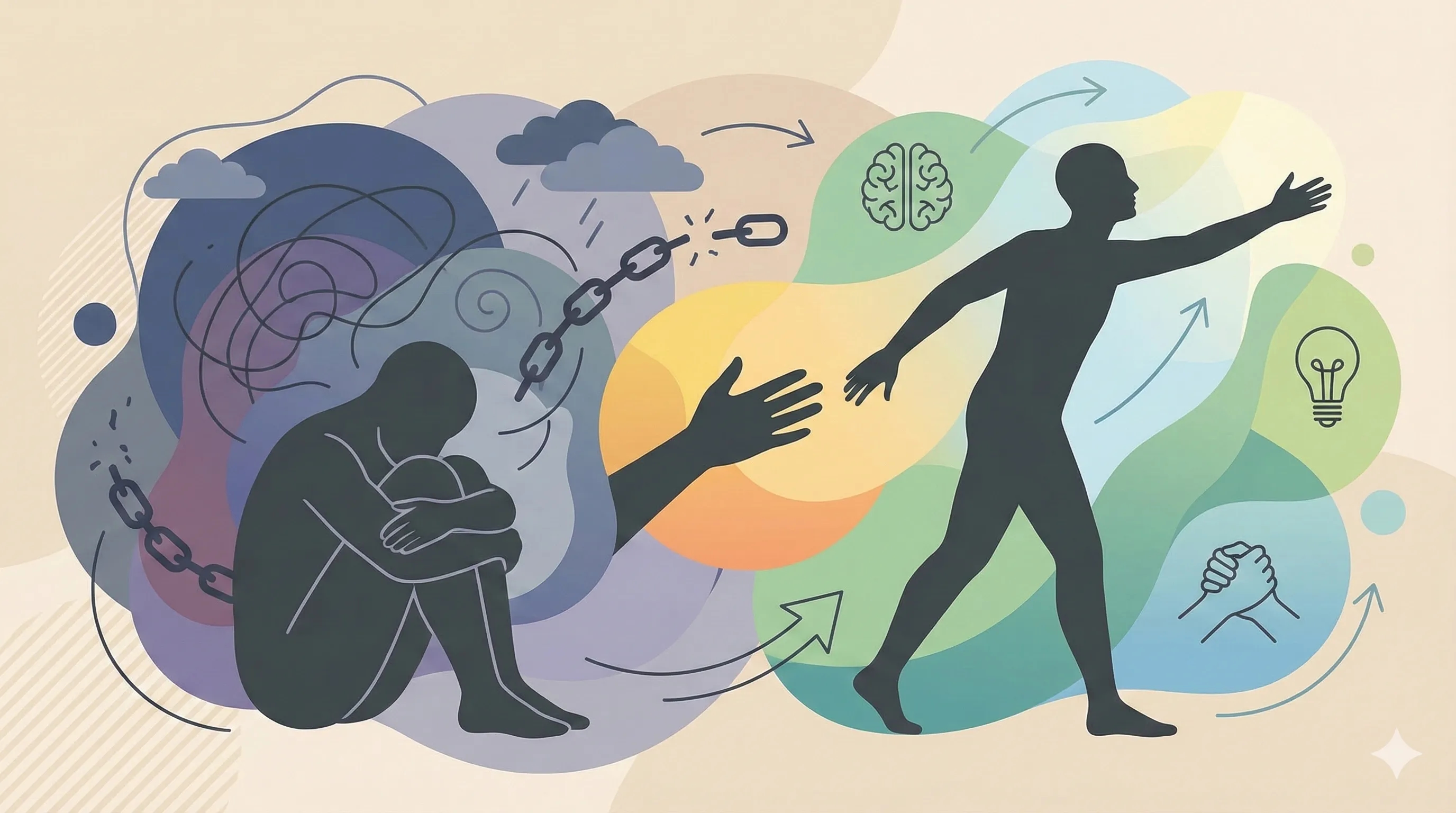
What is a psychotherapist?
A licensed psychotherapist is a professional with approved training in psychotherapy, with the mission of helping individuals understand and process psychological difficulties through conversation. The therapy explores thoughts, feelings, behaviors and reaction patterns, while simultaneously identifying the resources and strengths the individual has to find new ways to deal with life's challenges.
Psychotherapy can be short-term or long-term, and is given to individuals, couples, families or groups. The choice of method is adapted to the individual's needs and the therapeutic focus. Examples of common forms of psychotherapy are psychoanalytic and psychodynamic therapy, cognitive therapy, cognitive behavioral therapy (CBT), as well as systemic therapy and family therapy.
To become a licensed psychotherapist, you need to complete additional training – the Psychotherapist Program – which is offered at universities and colleges. Licensed psychotherapists can basically be psychologists, psychiatrists, physiotherapists or social workers.
Finding the right therapy and therapist
Starting psychotherapy is an important step, and it is only natural to wonder which form of therapy or therapist is right for you. What works for one person may not work for another – therefore it is important that you feel safe, understood and seen in the therapeutic relationship.
Different forms of therapy suit different needs. Cognitive behavioral therapy (CBT) often focuses on concrete problems and how they can be dealt with here and now, while psychodynamic therapy focuses more on how past experiences affect current feelings and behaviors. Systemic therapy is particularly well suited for families and relationships, where the interaction between individuals is at the center.
A good connection between you and the therapist is crucial for successful treatment. It is therefore common to start with one or more introductory conversations where you explore together whether therapy feels meaningful and helpful for you. If the chemistry is not right, it is perfectly fine to look elsewhere – the most important thing is that you get the help you need in a safe and respectful environment.